Even in a land celebrated for its hill stations, Darjeeling reigns with a quiet, unmistakable authority. Perched in the Eastern Himalayas, this storied town captivates with mist laden mornings, colonial grace, and views of the world’s highest peaks. Its charm is not loud or ostentatious. It is refined, layered, and enduring, much like the tea that has made it famous across the globe.
Estates of tea and timeless elegance
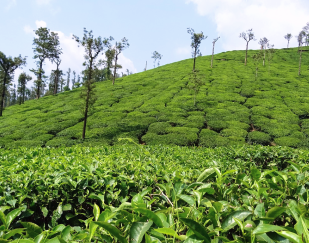
Darjeeling’s tea gardens are more than landscapes. They are living legacies. Revered as the source of the world’s finest black tea, often called the champagne of teas, these rolling emerald estates shape the soul of the region. Visitors wander through stepped plantations, don traditional attire, and witness centuries old cultivation practices that continue unchanged.
Select estates now offer rare, intimate stays where heritage mansions have been transformed into refined retreats. Colonial architecture, period furnishings, and attentive service define the experience. Surrounded by gardens that stretch endlessly into the hills, some estates overlook rivers, others gaze upon soaring Himalayan peaks. Luxury here is understated, rooted in space, silence, and proximity to nature.
Days unfold with guided estate walks, insights into tea plucking and production, and meals prepared using local recipes and freshly harvested ingredients. Evenings often feature traditional music and dance, offering a graceful introduction to Darjeeling’s cultural rhythms. Among the most celebrated is Glenburn Tea Estate, a sanctuary where bespoke experiences, sweeping vistas, and impeccable hospitality come together for the discerning traveller.
Trails traced through cloud and culture
Darjeeling holds a distinguished place in India’s trekking history, having pioneered organised trekking in the country. While the town itself is compact, the surrounding district unfolds into vast tracts of forests, ridgelines, and panoramic trails.
Routes range from gentle walks to demanding ascents, each rewarded with extraordinary views of Mount Everest, Kanchenjunga, Makalu, and Lhotse. Tonglu is a favoured day trek, winding through rhododendron forests before opening to unforgettable Himalayan vistas. It forms part of the famed Sandakphu trail, allowing travellers to extend their journey deeper into the Singalila Range.
The Sandakphu trek, typically spanning four to five days, is accessible even to beginners and passes through Singalila National Park, home to Red Pandas, Black Bears, Snow Leopards, and Barking Deer. From Sandakphu, a gentle extension leads to Phalut Peak, one of the highest points in the range. These journeys offer more than scenery. Trails pass through villages and homestays, allowing travellers rare insight into local life, customs, and traditions. Sunrises and sunsets here are moments of quiet transcendence.
Refined adventure amid the Himalayas
Darjeeling blends elegance with exhilaration. The Teesta and Rangit rivers carve dramatic paths through the hills, offering some of India’s finest rafting experiences. The Teesta’s rapids range from Grade 2 to Grade 4, making it suitable for both beginners and experienced rafters. The Rangit, with its powerful currents, is reserved for seasoned adventurers.
Melli is the most popular rafting point on the Teesta, offering gentle stretches ideal for first time rafters, as well as longer, more demanding courses for experts. Many travellers elevate the experience by pairing rafting with overnight riverside camping.
Paragliding is another signature experience. From launch points such as Jalpahar and Jamuney, travellers soar above tea gardens with Kanchenjunga unfolding majestically ahead and, on clear days, glimpses of Mount Everest in the distance. Mountain biking and rock climbing further expand Darjeeling’s adventure repertoire. Trails through Kurseong, Manebhanjan, Lamahatta, and the Senchal Wildlife Sanctuary challenge stamina while rewarding riders with wildlife sightings and sweeping Himalayan views.
Tenzing Rock, named after the legendary mountaineer Tenzing Norgay, is Darjeeling’s most iconic rock climbing site. One face caters to beginners, while the other offers a near vertical challenge for professionals. Directly opposite, Gombu Rock adds to the thrill. Each adventure here is elevated by the grandeur of the setting.
Icons shaped by history and height
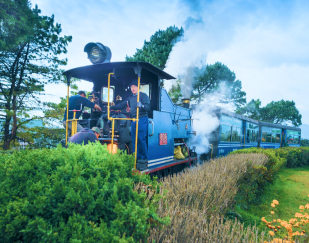
Darjeeling’s colonial past lends it a distinctive character that continues to enchant. The Darjeeling Himalayan Railway, fondly known as the Toy Train, is a UNESCO World Heritage Site and a symbol of the town’s legacy. The slow ascent to Ghum, one of India’s highest railway stations, offers ever changing Himalayan vistas.
A highlight of this journey is the Batasia Loop, an engineering marvel designed to ease the steep descent from Ghum. Today, it is a beautifully landscaped circular garden adorned with flowers, pathways, and a war memorial honouring Gorkha soldiers. From here, views stretch across Darjeeling town to the Eastern Himalayas beyond.
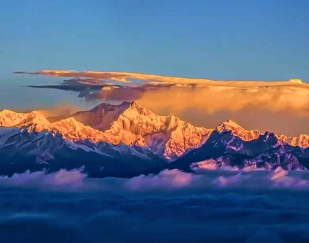
No visit is complete without witnessing sunrise at Tiger Hill. From this lofty vantage point, Kanchenjunga ignites in golden light, with Mount Everest visible on exceptionally clear mornings. Many travellers pause at Batasia Loop afterward, savouring breakfast amid mountain air and lingering awe.
A cuisine born of cultures
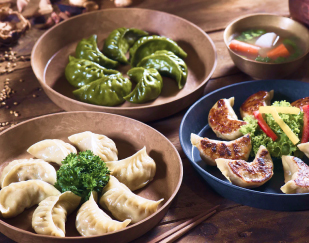
Darjeeling’s culinary landscape reflects its multicultural heritage, blending Tibetan, Nepalese, British, and Indian influences. Thukpa, a comforting noodle soup enriched with vegetables and meat, is a local favourite, as are momos served steamed or fried. Gundruk, made from fermented leafy greens, offers a uniquely regional flavour, while aloo tama combines potatoes and bamboo shoots in a fragrant, spiced curry.
Meat lovers gravitate towards sekuwa, where lamb, chicken, or pork is barbecued with tangy spices. Pork curry and stir fried cauliflower are equally popular, while kheer, rich with rice, milk, spices, and nuts, remains the dessert of choice.
Heritage restaurants add another layer of charm. Glenary’s, a colonial era institution, continues to serve Continental, Indian, and Chinese fare, while Keventer’s is famed for its classic breakfasts. Shangri La delights with Tibetan and Chinese cuisine, and The Park is known for Thai specialities. These establishments offer warm elegance, panoramic views, and a sense of continuity that defines Darjeeling’s dining scene.
Best time to visit
The most favourable time to visit Darjeeling is from March to May and October to November, when skies are clear, temperatures are pleasant, and mountain views are at their finest. Winter months from December to February are colder but atmospheric, while the monsoon season from June to September brings lush greenery alongside occasional travel disruptions.
Connectivity from the UAE
Travellers from the UAE can fly from Dubai, Abu Dhabi, or Sharjah to Kolkata or Delhi. From there, domestic flights connect to Bagdogra Airport, followed by a scenic road journey to Darjeeling. Luxury transfers can be arranged for a seamless and comfortable arrival.
Visa for UAE nationals and residents
UAE nationals are required to obtain an Indian e Visa prior to travel. Visa on arrival is available only to UAE passport holders who have previously held an Indian visa or e Visa. UAE residents of other nationalities may apply for an Indian e Visa, subject to eligibility based on their passport.
Darjeeling is not merely a destination. It is a mood, a memory, and a gentle ascent into Himalayan elegance that lingers long after one has left its misty embrace.