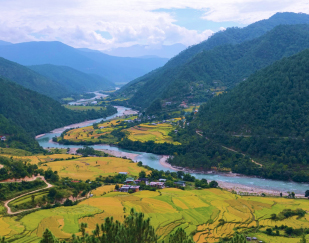
Bhutan, the mystical Land of the Thunder Dragon, radiates an elegance that is both serene and deeply soulful. Cradled within the Eastern Himalayas, this enchanting kingdom feels like a world suspended in time, where emerald valleys, pristine forests and cloud-kissed peaks create a landscape so pure it feels almost sacred. Every village, monastery and mountain pass whispers stories of ancient wisdom, harmony and spiritual depth.
Steeped in legends and shaped by a culture that honours happiness, balance and authenticity, Bhutan invites you to slow down and rediscover the art of being present. Allow yourself to be captivated by its golden roofed dzongs, vibrant festivals and the quiet magic that fills the air.
Craft your unforgettable escape to this Himalayan sanctuary with Flying Squirrel Holidays’ bespoke Bhutan journeys, curated with care, warmth and an eye for extraordinary detail.
Bhutan reveals itself like a rare gem, nestled within the dramatic folds of the Eastern Himalayas. This enchanting kingdom, cocooned between India and China, feels untouched by time, guided by a philosophy that celebrates balance, beauty and inner harmony. From its soaring peaks to its emerald valleys, every moment in Bhutan invites a deeper connection to nature and a quieter, more meaningful pace of life.
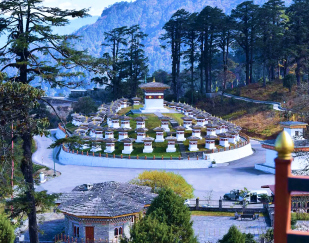
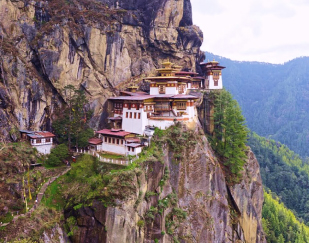
The monasteries of Bhutan are among the most serene and spiritually resonant sanctuaries in the world. Step inside these centuries old spaces and you are embraced by stillness, incense scented air and the echoes of ancient chants. The cliffside Tiger’s Nest Monastery, the sacred halls of Cheri Gompa, the majestic Punakha Dzong and the contemplative Thimphu Chorten form the spiritual heart of the nation, each one a masterpiece of devotion and Himalayan artistry.
Bhutan’s rugged landscape is a dream for those who crave adventure wrapped in luxury and solitude. The dramatic mountains offer exquisite trails for trekking, hiking and biking, while glacier fed rivers create the perfect canvas for rafting and angling. Whether you are weaving through pine forests, crossing suspension bridges or awakening to sunrise over snow draped valleys, Bhutan’s natural playground is both thrilling and soul stirring.
Cultural richness is woven into every Bhutanese celebration. The country’s famed Tshechu festivals are an immersion into vibrant costumes, sacred masked dances and centuries old rituals. Villagers arrive in their finest attire, families gather in joyous togetherness and monasteries come alive with music and prayer. Witnessing a Tshechu is not merely observing a tradition but experiencing the rhythm of Bhutan’s heart.
Bhutanese cuisine is simple, soulful and deeply tied to the land. Meals begin with a quiet prayer and an offering to local deities, honouring the harmony between nature and nourishment. Indulge in authentic flavours such as Ema Datshi, the beloved chilli and cheese dish, alongside comforting bowls of lentils, pork curries and fragrant rice. Savour delicate momos, fiery Jasha Maru and rustic Phaksha Paa for a true taste of Bhutan’s culinary heritage.
Bhutan is enchanting throughout the year, but the finest experiences unfold during spring and autumn when the valleys bloom, the skies remain crystal clear and the weather is refreshingly pleasant. These seasons are perfect for trekking, sightseeing and attending Bhutan’s renowned festivals. Winter brings crisp air and spectacular Himalayan views, while summer paints the valleys in lush green serenity.
Travelling from the UAE to Bhutan is smooth and effortless, with flights operating via major Indian hubs such as Delhi and Kolkata that connect seamlessly to Paro, Bhutan’s international airport. Premium cabin options, convenient schedules and short transits ensure a comfortable and well-paced journey from the Arabian Gulf to this Himalayan sanctuary.
All travellers, including UAE nationals and residents, require a visa to enter Bhutan. The process is thoughtfully streamlined and arranged through licensed Bhutanese tour operators, ensuring a seamless and stress-free experience. Once approved, the visa is issued on arrival in Paro, allowing you to step easily into the serenity and splendour of the kingdom.
The Jigme Dorji National Park is the largest protected area in Bhutan covering an area of 4,349 sq. km. and one of the major national parks in Bhutan.
One of the most biologically rich regions in the Eastern Himalayan zone, the heavy monsoon rains and the varied topographical gradient are the reasons for this rich plant and animal diversity. Fascinating animals like the Snow Leopard, Takin, Tiger, Black Bear, Blue Sheep, black necked crane, and Red Panda inhabit the forests and mountains of the park. It is one of the few places in the world where the Royal Bengal tiger and snow leopard habitats overlap.
Sacred peaks like the Jomolhari, Tsherimgang and Jichu Drakey are prominent landmarks in the park and glaciers, and glacial lakes are interspersed in the mountains. These glacial lakes form important headwaters for some of Bhutan’s main rivers.
An ancient fortress like temple, Changangkha Lhakhang is the oldest temple in Bhutan. It was built in the 12th century on a site chosen by Lama Phajo Drugom Zhigpo from Ralung, Tibet. Parents come here to blessings for their young ones from the protector deity Tamdrin. Children are blessed by a phurba or ritual dagger and given a sacred thread.
Located in the Motithang district of Thimphu, Motithang Takin Preserve is a wildlife reserve area for takin, the national animal of Bhutan. Not many people know about this animal. The Takin is a rare type of animal which falls under the goat species. Their actual habitat is the eastern Himalayas and these animals live in the high altitudes of the country.
Motithang Takin Preserve is one of the many attractions in our customizable Thimphu tour packages
The takin was declared as a national animal of Bhutan the credit of which is often attributed to a legend of the animal’s creation in Bhutan in the 15th century by Lama Drukpa Kunley.
About 5 km south of Thimphu on the old road to Paro and Phuentsholing, lies the beautiful Simtokha Dzong, built in 1629 by Zhabdrung Ngawang Namgyal. Simtokha is said to be the first dzong built in Bhutan. Although there were dzongs in Bhutan as early as 1153, this was the first dzong which incorporated both monastic and administrative facilities.
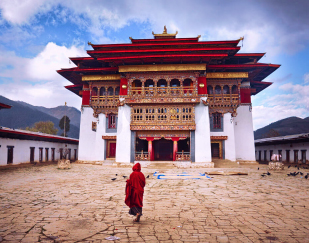
Rinpung Dzong or the Paro Dzong is one of the finest examples of Bhutanese architecture and among the important Bhutan tour places. The dzong’s full name - Rinche Pung Dzong translates to ‘Fortress on a Heap of Jewels’. The reason behind the name is because of its large collection of treasured buildings. All the buildings have huge windows with elaborate wooden carvings of Bhutan traditional motifs.
The dzong lights up at night and looks stunning. Hike up to the top of the fortress and enjoy the spectacular view of nearby valleys. The dzong also holds the colourful annual festival Paro Tshechu when a series of dances are performed by masked dancers in honour of Guru Rinpoche.
Drukgyel Dzong was built in 1649 to mark the victory of Bhutan over Tibet. The ancient ruins of Drukgyel Dzong are one of the most beautiful and famous archaeological sites in Bhutan. Since its construction in 1649, the Dzong has served as an important base for defence in the region until it was destroyed by fire in 1951.
The Drukgyel Dzong structure consists of a tall central building and an adjacent courtyard which is surrounded by lower buildings. It’s located on top of a hill with steep cliffs on three sides. Here you will see the fascinating stone work of the Dzongs of the past. Do climb to the top of the ruins to get an amazing view of the valley.
Considered one of the oldest dzong, Zuri Dzong dates to 1352 and is home to the valley’s local protector. The five-story fortress is well protected by the surrounding double walls even today. The place has an excellent collection of murals in the upper chapels which is dedicated to the protector Zaa (Rahulla).
Apart from its ancient rich history, the dzong is also a popular spot for hiking. Most visitors hike to the dzong for a bird’s eye view of the entire Paro valley. The hike to Zuri Dzong is of a moderate level and the total journey takes approximately 30 minutes to an hour. The landscape is beautiful and the view along the way is picturesque and awe-inspiring.
Go rafting in the rafting routes of Po Chu River or Mo Chu River, which are the most popular rafting courses in Bhutan. Unlike the usual adrenaline rush associated with rafting, rafting in Bhutan gives you the pleasure to gently float down the river while soaking in the surrounding beauty.
Go trekking on the snow capped mountains, the dense forests or the lush green valleys in Bhutan. Druk Path Trek, Jomolhari Trek, Snowman Trek Nabji Korphu Trek and Merak Sakteng Trek are some of the popular treks in Bhutan.
Go for a biking trip on the cycling route from Thimphu to Dochula Pass The rugged landscapes of Bhutan make it perfect for a bike ride.
Witness the colourful cultural festival of Tsechu which happens throughout Bhutan year-round. Don’t forget to experience the famous mask dance, a crowd-puller.
Go camping in the lap of nature, with the Himalayas as your neighbour. Camping in Bhutan is a mesmerizing experience. Sleep in the high mountains and wake up to a great sunrise.
Go kayaking in one of the six majestic rivers in Bhutan, which are fed by the Himalayan glaciers. Paro Valley, Trongsa and Punakha Valley provide excellent kayaking routes.
Go rock climbing in Vertical Bhutan Climbing Club, the only rock-climbing club located in Thimphu. Experience the adrenaline rush which comes with the breath-taking views from the top.
Take a dip in a hot spring. Hot springs, also known as Tshachus in Bhutan, are believed to have healing properties and for centuries, the local people of Bhutan have visited these hot springs to cure themselves of body aches and sinus.
Go for a wildlife safari in the dense forests of Mo Chhu River. See Asiatic elephants, black bear, leopards, tiger, and golden langur among other mammals in their natural habitat.
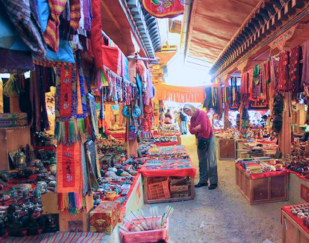
Go shopping in the weekend market of Thimphu. Along with edibles, you will also find handicrafts, textiles, religious stuff, baskets, and other similar things.
Perched up on a 900 m cliff overlooking the Paro valley in Bhutan, Paro Taktsang is one of the most important tourist attractions of Bhutan. Also known as the 'Tiger's Nest Monastery', the place is one of the Himalaya's most incredible sights.
It is one of 13 small monasteries, or “tiger lairs” where the Buddhist master Padmasambhava is said to have meditated in the 8th century. Padmasambava was a Brahmin royal who spread Tantric Buddhism through Bhutan and Tibet in the 8th century. He is considered to be as holy as the Buddha himself in these regions.
According to legend, when Padmasambava landed at Paro Taktsang to meditate, he had arrived on a flying tiger which had been his Tibetan concubine. For four months he then meditated on the mountain after which he subdued the local ‘demons’ and began the conversion of the Bhutanese to Buddhism.
For thrill seekers, the landscapes that surround Paro Taktsang provide great trek opportunities. The northern access point of the shrine makes its way through the rocky plateau called Hundred Thousand Fairies. At the end of the trek lies the sacred monastery. Inside the Buddhist monastery, there are dozens of statues of Bodhisattvas, Holy Scriptures, paintings, thangkas and other architectural pieces.
Punakha Dzong is the second largest dzong in Bhutan and perhaps the most beautiful of them all.
During spring the lilac-coloured jacaranda are a stark contrast to the dzong's characteristically towering white walls. This dzong was the second to be built in Bhutan and served as the capital and seat of government till a few decades ago. It is also the second largest fortress in Bhutan and speaks volumes about the beautiful stories and traditions of the Buddhist culture.
All of Bhutan's kings have been crowned here and almost every national treasure of the country is kept here. The king of Bhutan Jigme Khesar Namgyel Wangchuck got married to the Queen Jetsun Pema in 2011. The dzong is still the winter residence of the head clergy of Bhutan.
An important landmark of Thimphu, this beautiful monastery is one of the top tourist attractions of Bhutan. Tashichho Dzong has been the seat of the government since 1952 and currently houses the throne room and offices of the king, the secretariat and the ministries of home affairs and finance. If you do visit the place then please make it by 5 pm. The flag changing ceremony begins from 5 p.m., it begins in the courtyard and ends outside in the front.
Located in the north of Paro town, Kyichu Lhakhang is one of the many ancient, quiet, and beautiful temples in Bhutan. Also known as Lho Kyerchu or Kyerchu, it is considered to be the sacred Jewel of Bhutan.
The first temple was built way back in 659 AD by Buddhist King Songtsen Gampo of Tibet. The legend goes that it was constructed to pin down the left foot of a giant ogress that laid across Tibet and Himalayas, and was restricting the progress of Buddhism all around.
The Kyichu Lhakang houses the statue of Jowo Jamba originally from the 7th century. There is also a statue of Chenrezig outside the shrine that has 1000 arms and 11 heads. You will find many locals, especially the elder ones, shuffling around and rotating the prayer wheels all day long, muttering chants or prayers around the temple.
Marvel at the iconic Buddha Dordenma, at the capital of Bhutan. The massive, golden Buddha sits atop a gilded meditation hall. Situated on top of the mountains in Thimpu, it is also known as the Kunzang Phodrang. The statue symbolizes the dominant religion of the country as faith plays a very important role in the lives of the Bhutanese people.
The 52.5 meters tall statue, made of bronze and gilded with gold, holds a secret which many people don’t know. The Buddha Dordenma stores 125,000 miniature Buddhas encapsulated inside of its enlightened bronze chest, ranging from 8 to 12 inches tall. There are 100,000 statues of which are 8-inches-tall and 25,000 statues of which are 12 inches tall. Each of these miniature buddhas are also cast in bronze and gilded.
Like the large Buddha, these thousands of miniature Buddhas are also gilded and made of bronze, a major reason that the statue cost almost $100 million to build when it was constructed in 2015 to honor the 60th birthday of Jigme Singye Wangchuck, the fourth king of Bhutan.
According to prophecy, the statue is said to have been mentioned by Guru Padmasambhava, widely referred to as the “second Buddha,” in the eighth century.
Built in 1649, Ta Dzong was constructed above Paro Dzong to protect the undefended dzong. In 1968 it was renovated to house the National Museum. The unusual round building is shaped like a conch shell, with 2.5m-thick walls.
The museum has 6 floors each holding a part of the past. It exhibits more than 1,500 years of cultural heritage of Bhutan with a rare collection of paintings, art pieces, animal masks and many more facets of the rich culture. Many Bhutanese hold cultural ceremonies in this place as well.
It is the ideal place for those who are interested in knowing more about Bhutan’s past and the evolution of the Bhutanese culture. Some of the historical objects, inscriptions and artefacts are more than 1500 years old.
This is a SAMPLE itinerary. Our Bhutan tour packages from India are customizable to suit your preferences.
Day 1
After landing at Paro International Airport, you will be greeted by your guide upon exiting the arrival hall. On your first day you will be taken to Thimphu. After checking in to the hotel and have a taste of the Bhutanese cuisine for lunch. Then get ready for some light sight-seeing in Thimphu if you are not tired after you journey. On the way to the viewpoint over Thimphu is the home of Bhutan's national animal, the Takin.
Day 2
On your second day you will be setting off on a sightseeing tour of Thimphu. First on the list is the Heritage Museum. The museum connects its visitors to the Bhutanese rural past through exhibition of artefacts used in rural households. Next up is the Textile Museum. Here you will witness the art of traditional weaving. After the textile museum, visit the Thimphu Dzong which is not only the largest Dzong, but also the seat of the office of the King of Bhutan. Take a break from the tour and have your lunch. After lunch take a tour of the National Memorial Chorten, which was built in honor of the late King Jigme Dorji Wangchuk. Make a quick stop at the paper making factory to observe the art of papermaking. Five miles from Thimphu, on a lofty ridge, stands Simtokha Dzong which is the oldest fortress in the Kingdom. When you are done for the day, you can go back to your hotel and relax or check out the Centenary Farmers' Market which is held every Saturday. Here the locals from the valley and other nearby places come to sell their agriculture products.
Day 3
After breakfast, you will drive to Punakha across DochuLa. At a height of 3,088m, DochuLa is a scenic location with chorten, mani wall, and prayer flags which decorate this highest point on the road. After DochuLa pass, visit the Druk Wangyal Lhakhang (temple), built in honour of His Majesty the fourth Druk Gyalpo, Jigme Singye Wangchuck. Also visit Punakha Dzong. Built in 1637, the dzong is still the winter home for the clergy, headed by the Chief Abbott, the Je Khenpo. A stunning example of Bhutanese architecture, it sits at the fork of two rivers and portrays the image of a medieval city from a distance. End your day with a visit to Khamsum Yulley Namgyal Chorten which is a splendid example of the Bhutanese architecture and art and is the only one of its kind in the world.Day 4
Take a 2 hour drive from Punakha to Gangtey. Start with the Chhimi Lhakhang, it is located near Sopsokha village in the Punakha District of Bhutan. Pilgrims and tourists trek for 20 minutes through the agricultural fields of rice and mustard to get access to the monastery. Called the Fertility Temple by westerners, the monastery idyllically stands on a round hillock surrounded by scenic views and is one of the oldest monasteries in Bhutan. Located south of Punakha, Wangdue is the last town before central Bhutan, which is next on your list. The district is known for its fine bamboo work and its slate and stone carving. Take a break to view the Wangdue Phodrang Dzong. The Wangdue Dzong is perched on the spur of a hill and overlooks the confluence of the Tsang Chu and Dang Chu rivers.Day 5
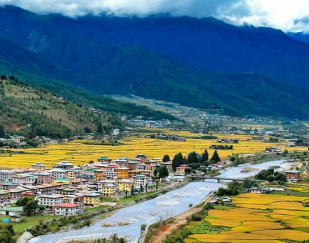
Head towards Paro on Day 5. This beautiful valley is home to many of Bhutan's old monasteries and temples. The country's only Airport is also in Paro. The valley is also home to mount Chomolhari which is situated at the northern end of the valley. Its glacier water forms the Pachu flowing through the valley. The following are some of the must visit attractions in Paro. First is the Paro Dzong or the Rinpung Dzong. The 15th century massive fortress and monastery is also the administrative centre of the dzongkhag. Next is Ta Dzong. Initially built as a watch tower. it was later converted into the National Museum in 1968. The museum houses antique collections of Thangka, textiles, weapons and armour, household objects and a rich assortment of natural and historic artifacts.Day 6
It is not possible to explore Paro in a day so we have allotted another day to the place. Begin with the famous Taktsang Monastery. This is the place where Guru Padmasambhava landed on the back of a tigress in the 8th century. Next up is Drukgyal Dzong. Built in 1647 by the great Zhabdrung Ngawang Namgyal, father and unifier of medieval Bhutan, the Dzong was destroyed by an accidental fire and left in ruins. Explore the ruins of the dzong and relive the memories of a glorious past. After lunch, visit the Kyichu Lhakhang, one of the oldest temples in Bhutan. You have the rest of the day to relax or set out for some sightseeing in Paro if you aren't already exhausted. Go out for a little shopping trip in the evening to get yourselves some souvenirs or try some items from the local cuisine.Day 7
Bid farewell to this beautiful Himalayan country and take an early flight back home.Please email me a copy of the sample itinerary
When is the best time to visit Bhutan?
December is the start of the winter low season in Bhutan, and with fewer tourists in the kingdom, Bhutan is a much more interesting place. The true culture and people of the kingdom are more easily recognizable.
If you want to have a real sense of trek or get awe inspired by the awestruck Bhutan Himalaya Range, then spring and autumn should be the best time for you to visit Bhutan.
Do travellers from UAE need a visa to visit Bhutan?
Yes, UAE citizens and residents need a visa to enter Bhutan, but the process is streamlined for tourists.
All visitors must book their trip through a licensed Bhutanese tour operator or international partner, like Flying Squirrel Holidays.
The visa is processed by the Tourism Council of Bhutan once the tour is confirmed.
It is issued electronically before arrival and stamped upon entry at the airport.
This ensures a hassle-free, curated journey for UAE travellers seeking a luxury Bhutan experience. Indians don't need a visa to Bhutan.
What are the best places to visit in Bhutan for couples?
Some of the best places in Bhutan for couples are Chele la Pass, Haa Valley, Dagala Thousand Lakes, Valleys of Bumthang, and Chomolhari.
Bhutan is slowly becoming the new must-see destination in southern Asia. Bhutan tourism has developed immensely in the past few years. This peaceful little country is emerging as a big draw and attracting those in search of a spiritual journey, a thrilling adventure, or a chance to experience a land tucked away in the lap of mountains and valleys.
Join our mailing list to receive the latest updates and freshest offers!